Friday, January 16, 2015

The Secret Sense by Isaac Asimov, 1941

Review of a nice science fiction story for Friday’s Forgotten Books at Patti Abbott’s blog Pattinase.

The Martians couldn't taste and their hearing was bad, but they had a secret sense all of their own.

In The Secret Sense, renowned sf writer Isaac Asimov narrates the story of an interplanetary friendship between Earthman Lincoln Fields and Martian Garth Jan.

Fields, who hails from New York, is living with Jan in an underground city on the Red Planet. The two unlikely friends are close enough to debate over sensitive issues without ill-feeling. So when Fields boasts about the superiority of the five senses possessed by earthlings, as opposed to the apparent lack of any by Martians, Jan is visibly amused.

Unfortunately for the Martian, he lets slip about a secret sense that his highly developed and cultured race possesses and which is far superior than the single or collective sense of sound, touch, sight, taste, and smell experienced by earthmen.


Fields doesn’t believe it but he is so overcome by curiosity that he misuses a Martian law to force his friend into revealing the secret sense to him. Garth Jan does so most reluctantly but warns Fields that he’ll be able to experience it only for five minutes after which the secret sense will be lost to him forever. 

Done Vol, a Martian physician injects Fields with a hormone that activates the secret sense and when it does, after a ten-minute interval, the snickering and unsuspecting New Yorker is exposed to the most amazing and profound experience that neither he nor any earthman has ever experienced. When the five minutes are up, he wakes up dazed and bewildered, pleading with Garth Jan not to take it away from him and to let it go on forever.

Excerpt — Garth Jan was smiling—a smile of dreadful malice, "I had pitied you just a moment ago, Lincoln, but now I'm glad—glad! You forced this out of me—you made me do this. I hope you're satisfied, because I certainly am. For the rest of your life," his voice sank to a sibilant whisper, "you'll remember these five minutes and know what it is you're missing—what it is you can never have again. You are blind, Lincoln, blind!"

It takes great imagination to conceive of a story like The Secret Sense and even greater imagination to put it down lucidly on paper. Asimov was a past master at this. The Secret Sense appeared in Cosmic Stories, March 1941, and was reprinted in The Early Asimov collection, 1972.

If you’re an sf reader, you will enjoy this story. You can read it at Archive.

Friday, January 09, 2015

A Century of Noir: Thirty-two Classic Crime Stories, 2002

I’d planned to review The Accused, a hardboiled novel by Harold R. Daniels for Friday’s Forgotten Books at Patti Abbott’s blog Pattinase but since there were still a few more pages left to be read, I thought I’d write about a collection of stories I'd overlooked so far.

© www.penguin.com
I found A Century of Noir: Thirty-two Classic Crime Stories on Amazon. The crime fiction anthology is edited by Mickey Spillane and Max Allan Collins, and published by the New American Library, a Penguin Random House company.

The anthology offers “Thirty-two stories of stunning ingenuity. Thirty-two writers of legendary genius. One hundred years of crime fiction in a one-of-a-kind collection.”

Noir fiction is described in different ways by different people. You can say colourful things about it. Publishers Weekly put it nicely: “It may not actually span a century, but this volume offers plenty of blood, booze and cigarette smoke in worlds populated by flinty men and fetching women.”

I haven’t read any of the crime stories when they were first written and published, though I have read other stories by some of the authors in this collection. Apart from what appears to be an excellent storehouse of noir fiction, each of the thirty-two stories also offers an understanding of the art of writing crime fiction.


Contents

Introduction by Max Allan Collins

‘The Meanest Cop in the World’ by Chester Himes

‘Just Another Stiff’ by Carroll John Daly

‘Something for the Sweeper’ by Norbert Davis

‘I Feel Bad About Killing You’ by Leigh Brackett

‘Don’t Look Behind You’ by Fredric Brown

‘Death Comes Gift-Wrapped’ by William P. McGivern

‘Murder for Money’ by John D. MacDonald

‘Cigarette Girl’ by James M. Cain

‘Guilt-Edged Blonde’ by Ross Macdonald

‘The Gesture’ by Gil Brewer

‘The Plunge’ by David Goodis

‘Tomorrow I Die’ by Mickey Spillane

‘Never Shake a Family Tree’ by Donald E. Westlake

‘Somebody Cares’ by Talmage Powell

‘The Granny Woman’ by Dorothy B. Hughes

‘Wanted-Dead and Alive’ by Stephen Marlowe

‘The Double Take’ by Richard S. Prather

‘The Real Shape of the Coast’ by John Lutz

‘Dead Men Don't Dream’ by Evan Hunter

‘The Used’ by Loren D. Estleman

‘Busted Blossoms’ by Stuart M. Kaminsky

‘The Kerman Kill’ by William Campbell Gault

‘Deceptions’ by Marcia Muller

‘The Nickel Derby’ by Robert J. Randisi

‘The Reason Why’ by Ed Gorman

‘No Comment’ by John Jakes

‘How Would You Like It?’ by Lawrence Block

‘Grace Notes’ by Sara Paretsky

‘One Night at Dolores Park’ by Bill Pronzini

‘Dead Drunk’ by Lia Matera

‘Kaddish for the Kid’ by Max Allan Collins

‘Lost and Found’ by Benjamin M. Schutz

Wednesday, January 07, 2015

Ten most viewed posts in 2014

This is a first-of-its-kind post about a first-of-its-kind blog. Without false modesty, let me say upfront: the blogging world has been made richer by its existence. Below are the Ten most viewed posts in 2014, hopefully not counting my own unrestrained views and frantic visits. I swear, in the name of Blogger, that the ‘Don’t track your own pageviews has been on for some years now. While I thought it was the ethical thing to do, I don’t know if it works. 

All of these posts, full of scintillating prose and wit, were written last year. Some posts are more popular than others. I'm told that readers have been falling over themselves to share the posts with others on social media. A few servers crashed and the deafening noise could be heard from Cyberabad in India to Silicon Valley in America. I'm happy to say that the blog has found mention in The Complete Idiot’s Guide to Blogging. It has also been nominated for the Blogsaysay Award for integrity in blogging, service to other bloggers, and keen intellect within the blogging community. The resounding success of the blog has forced major publishers to drop everything and gherao this blogger with never-before-heard book deals and promises of obscene advances and royalties. Steven Spielberg and James Cameron are, apparently, fighting for rights to make a fantasy movie based on the blog. It'll be titled War of the Blogs or Blogavatar depending on who gets the rights. Both have offered me the role of lead blogger. What more could any blogger ask for? I feel deeply humbled.


The view counts against each of the ten most viewed posts in 2014 give a fair indication of what draws visitors, intentionally or accidentally, to this blog. Once here, however, they hang around for long periods of time. They have to pull themselves away to visit other less-inspiring and lesser-known blogs. Latest statistics reveal that someone somewhere is reading something on this blog every single waking moment of his or her life.


Here goes…

01. Archie: To Riverdale and Back Again
Posted: March 11
Category: Overlooked Films, Vintage Comics
View Count: 494

02. Charles and The Witch by Shirley Jackson
Posted: February 7
Category: Short Stories, Forgotten Books
View Count: 424

03. Killing Trail by Charles Allen Gramlich
Posted: April 3
Category: Author Interviews, New Fiction
View Count: 419

04. Michael Crawford, aka Frank Spencer and the Phantom
Posted: January 7
Category: Actor Profiles, Overlooked Films
View Count: 407

05. A Body in the Backyard by Elizabeth Spann Craig
Posted: May 9
Category: Author Interviews, New Fiction
View Count: 394

06. The Father-Thing by Philip K. Dick and Rain, Rain, Go Away by Isaac Asimov
Posted February 14
Category: Short Stories, Forgotten Books
View Count: 379

07. Reading Habits #7: How do you treat your books?
Posted: March 27
Category: Reading Habits
View Count: 372

08. Footpath libraries
Posted: February 22
Category: Book Buys, My Pictures
View Count: 326

09. The Reader
Posted: November 4
Category: Overlooked Films
View Count: 320

10. Two short stories about corpses
Posted: January 2
Category: Short Stories
View Count: 297

Tuesday, January 06, 2015

Reading Habits #17: How many books do you read at a time?

Since I started blogging nearly six years ago, I have been reading a minimum of two to three books at a time. However, I don’t finish them all at the same time. Some spill over into next week or next month, and even next year. 

As of today, I think I have three or four half-read books going back to 2012 and 2013. Frankly, I'm not even sure how many. I could attribute it to a case of out of sight, out of mind, but I can’t because I see them almost every day, on my bookshelf or on my tab, the bookmarks still in place.

I have not learnt my reading lesson. I still read two to three books. I'm currently reading The Accused by Harold R. Daniels (hardboiled), Air Force One is Down by John Denis, Alistair MacLean John Edwards and Denis Frost in real life (thriller), and Me Tanner, You Jane by Lawrence Block (spy). So far I have read thirty-odd pages of all three novels. They are easy to read and comprehend. 

However, reading so many books at a time can be disorienting, especially when you are jumping from the plot and characters of one book to another within a span of half an hour. This morning, for instance, I read six pages of my paper edition of the Block novel and then immediately read six pages of the MacLean ebook. It didn't help. I had to go back a few pages to recall the story and the characters. As I read, characters from Daniels' noir novel popped into my head.


This is the reading equivalent of tailgating on the road. You know what that’s like and how annoying it can be for the driver in the front car. He’d be cursing, “Get off my back!” I guess that’s pretty much how the first book I'm reading must feel. "Maintain book discipline!" Too many books spoil the plot.

How many books do you read at a time?

Saturday, January 03, 2015

The Sheriff and His Partner by Frank Harris, 1891

This is the third review in my self-styled 'First Novels' challenge. I understand this novella was the first creative work by Frank Harris.

“I swear you in as a Deputy-Sheriff of the United States, and of this State of Kansas; and I charge you to bring in and deliver at the Sheriff's house, in this county of Elwood, Tom Williams, alive or dead, and—there's your fee, five dollars and twenty-five cents!" and he laid the money on the table.”

That’s what Samuel Johnson, the brave and popular Sheriff of Elwood County in the town of Kiota, Kansas, tells the narrator of The Sheriff and his Partner to do. Irish-born American author Frank Harris doesn’t tell us the narrator’s name or what he looks like. We know he is young and employed as a clerk in a law office in Kiota and that he is bored of his desk job. However, all that is about to change.

One afternoon, when ex-Judge Shannon is riding from his law office to his home about four miles out of town, he is waylaid by an armed stranger who robs him of his watch, his money, and his horse. Before leaving, the man instructs the judge to tell Sheriff Johnson that he was robbed by Tom Williams and that he could be found at the saloon in the neighbouring town of Osawotamie.

The incident, not unusual on the frontier, puts our narrator in an unexpected predicament, one entirely of his own making.

Following the robbery, the saloon in Kiota is agog with rumour and gossip. Both the sheriff and the narrator are there. When the talk among the high-spirited bunch of cowboys and farmers veers to a posse—to go to Osawotamie and arrest Williams—our unsuspecting narrator is annoyed. He realises that Johnson and Williams go back some way and that the robber has thrown the sheriff an open challenge. Our hero tells the sheriff that only one man is sufficient to bring the offender in, inviting a sharp and angry look from the lawman.


In a sudden turn of events, Johnson swears the narrator in as Deputy-Sheriff and tells him to go to Osawotamie and bring back Tom Williams. The narrator realises, too late, that he has been set up by the “boys” in the saloon. And for a reason: the narrator will remain a “stranger” and a “tenderfoot” in town till he gives proof of his courage. The sheriff presents him with an opportunity to do just that.

Does he bite the bullet? Or does he decline the sheriff's offer? The narrator has his pride and decides to do Johnson's bidding. With a pistol tucked in his right jacket pocket, he sets out to confront the robber and bring him in. He wants to prove to the town that he is no tenderfoot. The end is dramatic though I confess I didn’t see it coming. If I say more I’d be giving it away.

The Sheriff and his Partner, said to be the author’s first shot at creative writing, is a mild western and set in the early days of the frontier. The description of the town of Kiota and its inhabitants is sparse although we are told Sheriff Johnson is a man of medium height and sturdy build, a broad forehead, clear, grey-blue eyes, and a thick brown moustache and beard. The once lawless town has been transformed by emigrants into a habitable place free of violence. They do so with the help of a man named Johnson. Many a lone ranger like Johnson has walked into frontier towns and cleaned it up.

I particularly liked the author’s description of Kiota told through the voice of the narrator. It would probably apply to most early frontier towns. He writes:


“An outpost of civilization, it was situated on the border of the great plains, which were still looked upon as the natural possession of the nomadic Indian tribes. It owed its importance to the fact that it lay on the cattle-trail which led from the prairies of Texas through this no man's land to the railway system, and that it was the first place where the cowboys coming north could find a bed to sleep in, a bar to drink at, and a table to gamble on. For some years they had made of Kiota a hell upon earth. But gradually the land in the neighbourhood was taken up by farmers, emigrants chiefly from New England, who were determined to put an end to the reign of violence.”

© Wikimedia Commons
The author
Frank Harris (1856-1931), an editor, journalist and publisher, was a friend of George Bernard Shaw and Oscar Wilde and was associated with H.G. Wells, Max Beerbohm, Winston Churchill, and Arnold Bennett among others. He wrote biographies of Shaw and Wilde. Harris was also known for his erotic book My Life and Loves, which was banned in several countries for its sexual explicitness. Harris was considered to be a fine writer of his era. This story proves that he was.

Friday, January 02, 2015

Dubai by Robin Moore, 1977

Patti Abbott hosts 2015's first Friday’s Forgotten Books at her blog Pattinase.

Robin Moore (1925-2008) was a prolific American writer of crime, war, and espionage fiction. He wrote some of his books in collaboration with other writers.

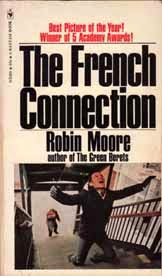
His novels were racy and entertaining with edge-of-the-seat action. Remember Gene Hackman and the famous car chase in The French Connection? That, apparently, came out of his 1969 book The French Connection: A True Account of Cops, Narcotics, and International Conspiracy (1969), a nonfiction book that exposed the French connection in a drug trafficking racket.

Moore was also known for another nonfiction book called The Green Berets (1965) set during the Vietnam War. According to Wikipedia, the author used his connections with Harvard classmate Robert F. Kennedy for access to the US Special Forces and write about the elite unit. Later, John Wayne played the lead in the film version.

I have not read either The French Connection or The Green Berets, but I read one other novel more than two decades ago which led to my discovery of Robin Moore—Dubai (1977).

I remember Dubai well but not well enough to write a review. Moore’s Dubai, one of the seven emirates of the United Arab Emirates, is very different from Dubai as we know it today—crazy rich, swanky, polished, and glittering through its imposing manmade glass towers and hotels, artificial palm-shaped islands, and super cars and superhighways. 

Instead, Moore gives us a Dubai of the seventies, a Dubai still in the making, where westerner Fitz, a disgraced army officer, exploits the desert land of opportunities and conspiracies to make his fortunes. Fitz uses his connections with the ruler, Sheikh Rashid, to engage in high-risk business ventures including smuggling.

Dubai is a thriller set around oil deals and cartels, gambling and drug smuggling, beautiful women and sex, and power and politics. Above all, it revolves around the smuggling of gold in dhows from Dubai to Bombay, across the Arabian Sea. The route was once notorious for smuggling of all kinds of goods between India and the tiny oil kingdom.

Good writing style, a well-crafted story, and virtually unputdownable.

Thursday, January 01, 2015

Books I read in 2014

I’m combining my post on books and short stories I read in the fourth quarter of 2014 with the total for the year because I read very little in the last three months of the year gone by—only nine novels and novellas and a handful of short stories. I spent far too much time playing chess and scrabble, watching films, and blogging.

In all, I read 41 novels and novellas and 31 short stories in 2014, an average of 3.41 and 2.58 a month, respectively. Clearly, I need to read more.

However, I'm satisfied with what I read.

The novels, novellas, and short stories were published over 155 years and covered several genres like crime and mystery, war and western, thriller and espionage, horror and science fiction, young adult, humour, and nonfiction.

The earliest book I read (reread actually) was A Tale of Two Cities by Charles Dickens, 1859, and the most recent book I read was Gray Mountain, 2014, by John Grisham.

There were some notable takeaways from my reading in 2014.

01. Interviews with my blog friends Charles Gramlich and Elizabeth Spann Craig (look in the sidebar). My thanks to both for their very prompt and enthusiastic response to my questionnaire. I hope to do more author interviews in 2015.

02. I read more contemporary fiction last year than I ever did since I started blogging in 2009—11 novels and novellas and four short stories published this century. I should celebrate!

03. Most difficult book I read was The Sound and the Fury by William Faulkner, 1929. I almost gave up after the first few pages.

04. At five novels, Jack Higgins (Harry Patterson in real life) was the most read author of the year. He might be the first to breast the tape again this year.

05. Book that resonated with me the most was the media-centric The Imperfectionists by Tom Rachman, 2011. A journalist’s life in Rome isn't very different from that of one in Bombay or Delhi. The young author shows you how to write nonfiction and make it read like fiction.

06. The White House Connection by Jack Higgins, 1998, and Deception Point by Dan Brown, 2001, had two of the most improbable plots. Among other things, it’s very easy to pull one over the President of the United States.

07. Late 2014, I kicked off my own ‘first novels’ challenge with The Hardy Boys: The Tower Treasure by the pseudonymous Franklin W. Dixon, 1927, and War Against the Mafia by Don Pendleton, 1969.

08. Two titles I found discomfiting to an extent were both legal novels—Defending Jacob by William Landay, 2012, and Gray Mountain by John Grisham, 2014.

09. The grittiest crime novel and police procedural was Public Murders by Bill Granger, 1980.

10. In short stories, I enjoyed reading The Education of a Pulp Writer & Other Stories by David Cranmer, 2008-2014, and Green Acres, 2012, and Ding Dong Bell The Kitten in the Well, 2014, by Dorte Hummelshøj Jakobsen. Both David and Dorte are my good friends.

I have listed below all the novels and novellas and short stories I read in 2014. They are not in the order I read them. Rather, I have listed them according to their year of publication, from the earliest to the most recent.

Novels & Novellas

1859 - A Tale of Two Cities by Charles Dickens (reread)
1888 - Buck Hawk, Detective by Edward L. Wheeler
1899 - The Bread Line: A Story of a Paper by Albert Bigelow Paine
1900 - Sister Carrie by Theodore Dreiser
1907 - The Rome Express by Arthur Griffiths
1927 - The Hardy Boys: The Tower Treasure by Franklin W. Dixon
1928 - The Dunwich Horror by H.P. Lovecraft
1929 - The Sound and the Fury by William Faulkner
1933 - Carved in Sand by Erle Stanley Gardner
1951 - Bullet Proof by Frank Kane
1951 - A Noose for the Desperado by Clifton Adams
1957 - Hostage for a Hood by Lionel White
1957 - The Legion of the Damned by Sven Hassel
1960 - To Kill a Mockingbird by Harper Lee (reread)
1962 - The Loneliness of the Long Distance Runner by Alan Sillitoe
1963 - The Dark Side of the Island by Jack Higgins
1963 - The Power of Your Subconscious Mind by Joseph Murphy
1968 - Greylorn by Keith Laumer
1969 - War Against the Mafia by Don Pendleton
1971 - The Last Place God Made by Jack Higgins (reread)
1972 - The Savage Day by Jack Higgins
1973 - The Way to Dusty Death by Alistair MacLean

1975 - The Miracle of Mindfulness by Thich Nhat Hanh
1980 - The Man in the Moon by James Reasoner
1980 - Public Murders by Bill Granger
1982 - Touch the Devil by Jack Higgins
1986 - Stallion Gate by Martin Cruz Smith
1988 - The Hell Raisers (originally Saddle Pals) by Lee Floren
1998 - The White House Connection by Jack Higgins
1999 - The Renos by Wolf Lundgren

2001 - Deception Point by Dan Brown
2005 - Beating Around the Bush by Art Buchwald
2011 - The Imperfectionists by Tom Rachman
2012 - The Red Reef by James Reasoner
2012 - Defending Jacob by William Landay
2012 - A Body in the Backyard by Elizabeth Spann Craig
2012 - Rendezvous by Nelson DeMille
2013 - Splatterpunk: AN.AL—The Origins by Athul DeMarco
2014 - The Button Man by Mark Pryor
2014 - The Common Room by K.B. Rao
2014 - Gray Mountain by John Grisham

Short Stories

1856 - The Wreck of the Golden Mary by Charles Dickens
1893 - The Mystery of the Semi-Detached by Edith Nesbit
1899 - Anne by Fanny Stevenson
1902 - The Fifth String by John Philip Sousa
1902 - The Conspirators by John Philip Sousa
1902 - Experiences of a Bandmaster by John Philip Sousa
1911 - Comrades by Elizabeth Stuart Phelps
1912 - Smothered in Corpses, three stories by Ernest Bramah
1913 - The Adventure of the Dying Detective by Arthur Conan Doyle
1917 - Whiffet Squirrel by Julia Greene
1922 - The Suppressed Poems of Ernest Hemingway
1933 - Hot Goods by Ray Cummings
1935 - Who Murdered the Vets? by Ernest Hemingway
1940 - Day Time Stopped Moving by Bradner Buckner
1943 - Nice Corpses like Flowers by Dorothy Les Tina
1948 - Charles by Shirley Jackson
1949 - The Witch by Shirley Jackson
1951 - The White Fruit of Banaldar by John D. MacDonald
1953 - Lamb to the Slaughter by Roald Dahl
1953 - The Complete Stories of Evelyn Waugh
1954 - The Intruders by Evan Hunter
1954 - Sorry: Wrong Dimension by Ross Rocklynne
1954 - The Father-Thing by Philip K. Dick
1956 - Love Story by Irving E. Cox
1959 - Rain, Rain, Go Away by Isaac Asimov
1960 - Hemingway in Space by Kingsley Amis
1963 - A Woman on a Roof by Doris Lessing
2008 - The Education of a Pulp Writer by David Cranmer
2010 - Killing Trail, four stories by Charles Allen Gramlich
2012 - Green Acres by Dorte Hummelshøj Jakobsen
2014 - Ding Dong Bell The Kitten in the Well by Dorte Hummelshøj Jakobsen