Tuesday, September 25, 2018

Rain on the Dead by Jack Higgins, 2014

I will give you my verdict right away. Rain on the Dead (2014) is probably the most disappointing Jack Higgins novel I have read till date.

The British writer's 76th action-thriller has a fine cast of characters, all old anti-terrorism hands — legendary ex-IRA gunman Sean Dillon (his 21st appearance), his boss General Charles Ferguson (head of a secret intelligence unit reporting to 10 Downing Street), Captain Sara Gideon (a decorated Afghan war hero), Major Giles Roper (a wheelchair-bound tech whiz), and the Salters, Billy (a gangster turned MI5 agent) and his uncle Harry (who runs a dockside pub and is handy with a gun).


While those are good reasons to read the book, a weak storyline and an even weaker plot are reasons to avoid it. Unless, like me, you're a big Higgins fan and will read anything by the man who gave us such gripping fare as The Last Place God Made (1971), A Prayer for the Dying (1973) and The Eagle Has landed (1975).

Rain on the Dead begins with a failed assassination attempt on the charismatic former US President, Jake Cazalet, at his estate on Nantucket, an island off Cape Cod, Massachusetts. Unfortunately for the two Al Qaeda-backed Chechen gunmen, Ferguson and his team happen to visit Cazalet just at the time and foil the bid masterminded by a cold and calculated faceless entity called the Master. Not very original, as you can see, and not very scary either.


From there, the action moves to Drumgoole in Ireland, Paris and finally London, as team Ferguson thwarts repeated attempts to kill Cazalet. In frustration, the Master, who reports to some kind of a grand council, hires desperate men, including special ops gone rogue, to bump off Dillon, Gideon and the others, but all in vain.

Here are two more reasons why I did not enjoy the novel as I thought I would.

Apart from the weak plot, the logic or the lack of it, and the occasional typo (yes, those too), I found the writing style, peppered with dialogue, almost amateurish. Preposterous as it may sound, it seemed to me that the book was ghostwritten. The narrative lacked depth and the conversations between the various players were at times school-grade. This was not the Jack Higgins I grew up reading.

The third reason is Sean Dillon, whose role during The Troubles in Northern Ireland haunts him in many of his novels including this one; just as they do Higgins' other ex-IRA heroes. We get a sense that Dillon, though still respected by his peers and feared by his enemies, is growing old and past his prime. In Rain on the Dead, he plays a largely supportive role, always on hand with a Colt .25 but not doing much. The brave and likeable Captain Sara Gideon and the young and reckless Billy Salter take the honours, as they run down the shadowy Master before he can get anywhere near Jake Cazalet (who first appears in Dillon #6 The President's Daughter, 1997). 


So, would I stop reading Higgins? Never. I have many of his books to read and I'm sure I'll enjoy many of those.

Thursday, January 18, 2018

Merrick by Ben Boulden, 2017

"Thief, gunman, killer. A hero you'll hate, but root for anyway."
 
Every time I watch a movie about a heist or read a story about a robbery at gunpoint, the first thought that comes to my mind is Something’s going to go wrong. In spite of meticulous planning, things don’t always go as intended. That’s exactly what Merrick—a tough outlaw with a conscience and the hero of this fast-paced Western short story by Ben Boulden—finds out when he teams up with an old partner to ambush an armoured wagon in Texas and make away with a $15,000 payroll.


Merrick, who is brought in as a last-minute replacement, is mindful of the risks involved in the venture. He knows by experience that a holdup is never easy, even if the dough is. Though he is reluctant to accept mastermind Clarence Tilley’s offer at first, the .44 Remington wielding outlaw cannot escape the allure of money and the prospect of moving to the California coast and living it up.

But the outlaw’s getaway plan is dashed to the ground when Spider Robison, a particularly vile, greedy and trigger-happy gang member, double-crosses his accomplices, wallops Merrick in the head and decamps with the loot. After regaining consciousness, Merrick sets out to hunt down Robison, not so much to seek revenge as to retrieve his rightful share of the heist and be on his way.

Merrick is not the quintessential Wild West outlaw. He is an outlaw alright but one with scruples, the kind who’d indulge in unlawful acts but probably won’t go beyond a limit. While he can be tough and dangerous, and shoot to defend himself, he also has a certain vulnerability, a sense of fair play and justice, perhaps even compassion, which sets him apart from others of his kind.

All of 25 pages, Merrick is a cracker of a Western story that fans of the genre will enjoy reading. The plot—a stage robbery gone wrong—reminded me of pocket-size black-and-white Western comics I was fond of reading in my youth. I could visualise each scene unfold in the form of a comics panel or frame. In that sense Merrick would make for a very entertaining comic-book.

I hope Ben Boulden—author of Blaze! Red Rock Rampage (15) and Blaze! Spanish Gold (18) in the Blaze! Adult Western Series—casts Merrick in more short stories, perhaps even a novel or two. I’d like to read more about the Utah outlaw’s exploits in the author's crisp narrative style. Recommended.


Available for Kindle, $0.99.

Wednesday, January 03, 2018

Books and ebooks of 2017

I bought less than a dozen books and ebooks in 2017, and intentionally so. It was in keeping with my decision to read as many books as I could from my collection of 100-odd paper books. The resolution did not work. Like a government project delayed by time overrun, I have decided to carry-forward the ambitious plan to 2018 and keep my fingers crossed.

There were a few notable acquisitions during the year, books I was glad I read.

Author Margot Kinberg, who blogs about crime fiction every single day at Confessions of a Mystery Writer, very kindly sent me a signed copy of Past Tense, the third book in her mystery series featuring ex-cop Joel Williams. The professor in the Department of Criminal Justice at Tilton, a fictional university, is an affable and unassuming gentleman with a nose for sniffing out clues. Past Tense was an engaging campus mystery. You can click here to read the review.

Ben Boulden's debut novel Red Rock Rampage, #15 in the Blaze! Adult Western Series, features J.D. and Kate, a husband-and-wife team of gunfighters in what is an action-packed tale written in a racy style. I reviewed the book and interviewed Ben here. In coming weeks, I intend to read his second novel Blaze! Spanish Gold. But before that, I will be reviewing his 25-page Western short story Merrick (since reviewed). You can learn more about Ben and his work over at his blog Gravetapping.

During the year I was lucky to purchase three out-of-print Sudden paperbacks, my favourite Western series created by British author Oliver Strange. One of these is Sudden Strikes Back by English writer Frederick H. Christian who wrote five of the Sudden novels, following Strange's original ten books. I now have eleven of the Sudden novels that I have been reading and rereading since the eighties.

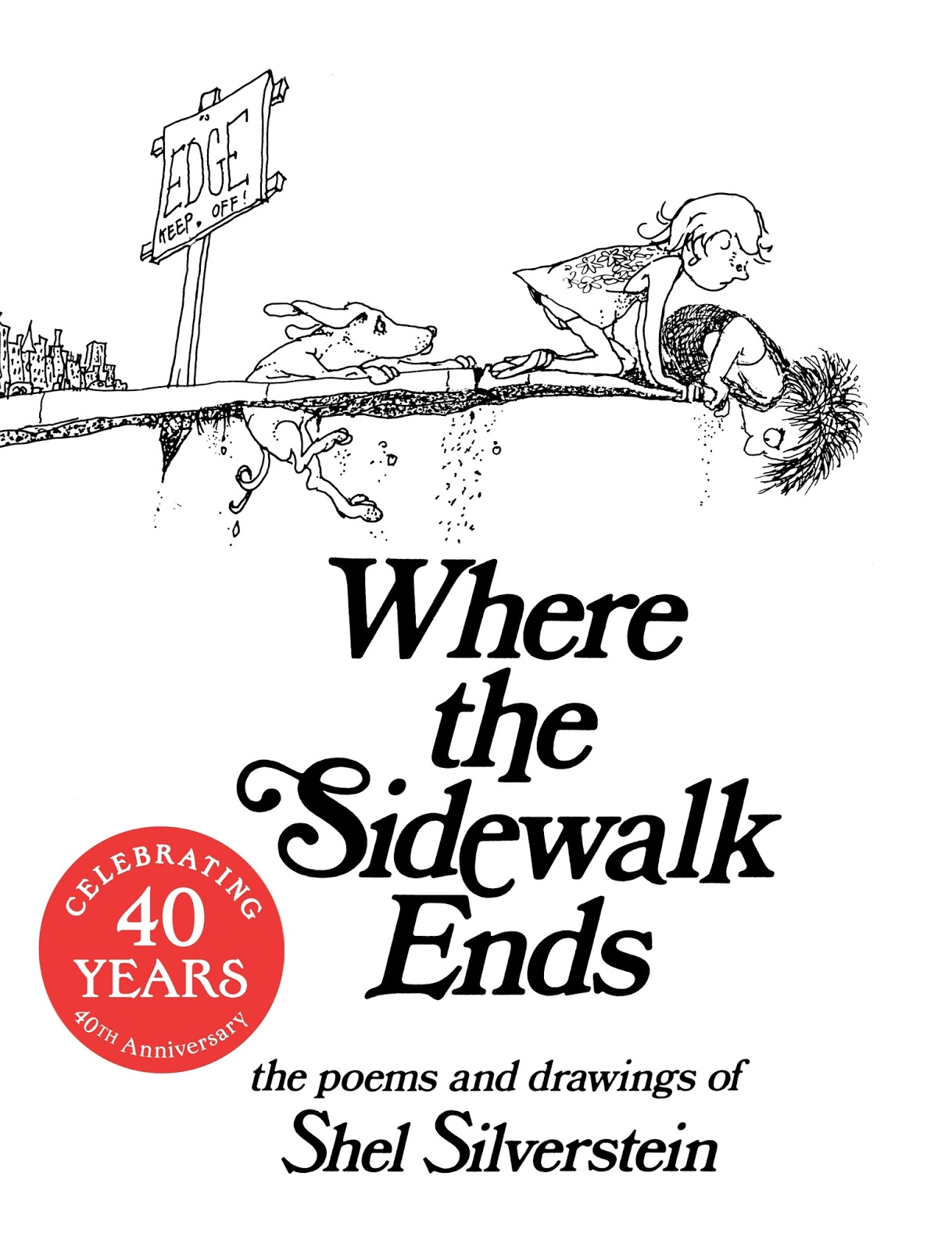
Finally, a friend and colleague gifted me a lovely hardback edition of Where the Sidewalk Ends, a delightful collection of children's poetry written and illustrated by American author and cartoonist Shel Silverstein. Wikipedia quotes Silverstein as saying that he never studied the poetry of others and developed his own "quirky style, laid back and conversational, occasionally employing profanity and slang." Where the Sidewalk Ends inspires you to pen your own verse.


Sunday, December 31, 2017

Nothing much happened

2017 was probably my worst year of reading and writing in recent memory. I read very few books, short stories, essays and poetry, and reviewed even less on my blog. I was preoccupied with personal and professional labours, even as commuting to work and back got more stressful, which left me with little energy to read or blog. 
© Bill Waterson

As the year wore on, my visits to other blogs declined. It was the one thing I missed the most. But a New Year, as Calvin tells Hobbes, is a "new beginning" and full of "new possibilities" and I look forward to reconnecting with my fellow readers and bloggers. In fact, it's the first thing I'm going to do in 2018, starting tomorrow.

Some of you may have noticed that I'm quite active on social media but that's only because I mostly post on the go, waiting for a bus, an autorickshaw or a suburban train and sometimes during actual commute when I'm in no mood to read. What I didn't achieve reading and blogging, I more than made up with social media—I doubled my followers on Facebook, Twitter, LinkedIn and, more recently, Instagram. It's another thing that I know less than 50 per cent of my connections. I have also been listening to a lot of old music and playing a lot of chess and Scrabble on Android. I have been playing the two board games since I was a kid, thanks to dad.

During the year I watched many films and serials, mostly Netflix originals including Marvel's stand-alones—Daredevil, Luke Cage, Jessica Jones and Iron Fist—though I still have to watch their combined miniseries The Defenders. I enjoyed Godless (western) and Alias Grace (psychological), both six-part limited series. Alias Grace is based on Margaret Atwood's Booker-nominated novel, which I have not read. Beasts of No Nation, the story of a child soldier in a war-torn African country, was a disturbing film. Idris Elba's character as the rebel warlord lacked depth.

For some reason, I also binge-watched Jason Statham's crime flicks on Netflix and I quite enjoyed it all; his films reminded me of the hard-boiled thrillers I often read. A couple of plots were straight out of a James Hadley Chase or a Lionel White, particularly the two caper movies The Italian Job and The Bank Job.

I also watched Minimalism: A Documentary About the Important Things, which "Examines the many flavors of minimalism by taking the audience inside the lives of minimalists from all walks of life—families, entrepreneurs, architects, artists, journalists, scientists, and even a former Wall Street broker—all of whom are striving to live a meaningful life with less." I found it interesting though there was nothing new about the "less is more" principle; mystics have been advocating it for centuries. We just need to be reminded of it every now and then. To be honest, I have been hoarding books when I should be reading and giving them away, at least the ones that aren't going to be a part of my collection. 

© www.theminimalists.com

On the writing side, well, I'm still writing; struggling actually, with time constraints and writer's block, though the latter is a self-created myth. It's an excuse not to write and watch a movie, instead. I have incomplete short stories, a novel I've only recently started working on, and a work of nonfiction that I hope will make people feel good about themselves. I'm going to persist with these projects in 2018, try and write every single day, and work to a deadline.

© Juggernaut Books
On a slightly positive note, I published my first short story, A Little Murder at Dinner, at Juggernaut Books, a Delhi-based writing platform. It's an atmospheric tale about a cop and his wife, and set around a couple of murders.

Here is an extract from that story:

“Do you really think she did it, Harry?” Trisha’s voice was almost a whisper.

Hemmady shrugged, “The Dina I knew a long time ago couldn’t have done it. Now I’m not so sure. People change and that’s not always good. Sometimes bad things happen. I think she and Rana decided to get back together, maybe for Jenny’s sake, maybe for the money, and it all went wrong. I feel for Jenny. She didn’t deserve any of this.” 

“Will you be okay, Harry? I mean, you’re going to see her...,” Trisha’s voice trailed off.

“I’ll be fine, Trish. It’s just another homicide.”

She didn’t stress the point. They both knew it was more than that.


So that's how the year was—nothing much happened. But I do hope to make things happen in 2018, particularly where my writing is concerned.

Monday, November 27, 2017

Dead Line by Stella Rimington, 2008

The story of English author Stella Rimington is as interesting as the plot of Dead Line, the fourth novel in her espionage series centered around MI5 agent Liz Carlyle. Dame Rimington, who joined Britain's domestic counter-intelligence and security agency in 1969, was appointed Director-General in 1992—becoming not just the first woman to hold the post but also the first head of MI5 to go public.

With nearly three decades of intelligence service behind her, the series is no doubt stamped with her rich and personal experience. Dead Line, the only book I have read so far, is a convincing story in the cloak-and-dagger world of spy fiction.


The British government is weeks away from hosting a Middle East peace conference at a resort in Scotland. While Syria and Israel are at the centre of the peace talks, heads of government from Britain, the United States, Jordan, Lebanon, and Iran are expected to lend their weight to the roundtable. The conclave may not yield immediate results but it's important for the UK that the event concludes peacefully. The prestige and reputation of 10, Downing Street depends on it.

But there are people, rogue agents, even nations who, true to reality, will stop at nothing to wreck the Gleneagles conference. Following a tip-off from MI6, or the Secret Intelligence Service, MI5 boss Charles Wetherby entrusts the sensitive case to agent Liz Carlyle—find the two terror suspects, including a Syrian journalist, who are planning to disrupt the global conference and save the day for Her Majesty's government.


There is just one problem: Liz has almost nothing to work on. So she starts digging from scratch and soon uncovers a plot far more serious than she and Wetherby, or anyone in British Intelligence, could have imagined; one that nearly gets her killed and out of business. Liz's investigations set her on a collision course with friends from other intel services, the CIA and Mossad. Eventually, she nails the threat down to David Kolleck—a diabolically clever Syrian agent with a grim past and an insensate thirst for revenge.

Dead Line may not have the glamour of a Tom Clancy thriller, the legacy of a John le Carré page-turner or the technical depth of a Craig Thomas novel. But it's a realistic depiction of what might actually take place in the sanitised corridors of intelligence services and those involved in the fight against terrorism and subversion. Rimington has an easy and evenly-paced narrative style, and her plotting is methodical, which can be attributed to her own experience. She has drawn Liz Carlyle as a credible intelligence officer who leads a normal life with her share of career aspirations, familial troubles, and hidden feelings. 

I plan to read more in the series by Britain's most famous spy.

Sunday, October 08, 2017

Photo Essay: Browser's delight, buyer's paradise

Secondhand books have the tantalising aroma of a Goan vindaloo or a Malwani curry.

Browsing through books is half the battle. Buying books is not necessarily winning the fight. I have spent a greater part of my reading years doing no more than looking up books, admiring covers, flipping pages, reading back of the book, searching for bookmarks, and envying other people's choices and purchases. I find as much joy and satisfaction in browsing as I do in buying books. Of course, there have been many occasions when I have walked out empty-handed and instantly regretted not picking up a coveted title or an out-of-print book, and I have rushed back the next day only to find it gone. Book kismet.

Old or new, shops or footpaths, books will always be around, to mock, deny, bond, and befriend. Let me take you through some of my secondhand book haunts, mostly in South Mumbai, where I have browsed more than I have bought. A few of these pictures are old and have been reproduced before; the rest are as recent as yesterday.


The footpath libraries of Flora Fountain (Hutatma Chowk).

Abraham Lincoln in not so strange company.

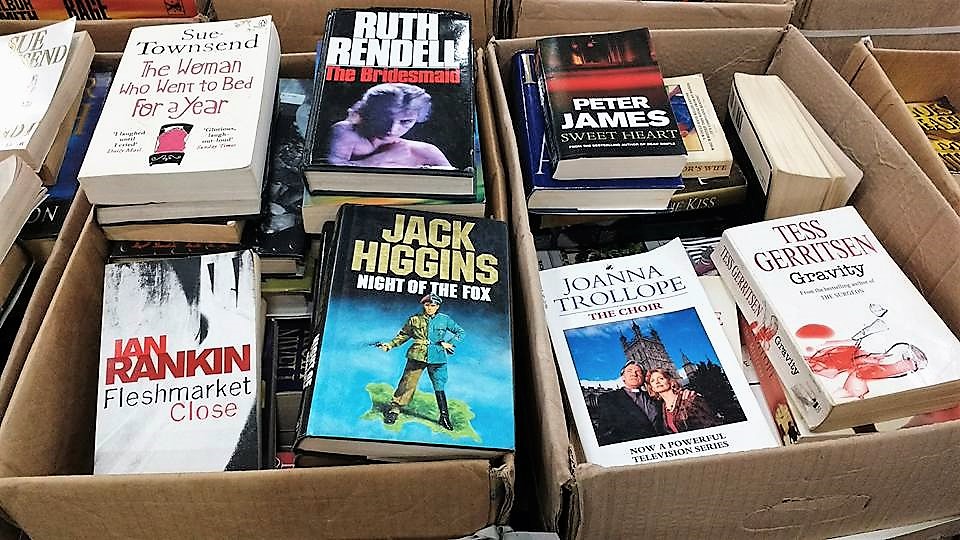
My pick of the box — Jack Higgins, of course.

A pavement seller on Mahatma Gandhi Road opens for the day.

The suburban bookshop where I browse or board a bus.

The English historical novelist on my wish-list.

Fiction rubs spine with self-help on Mahatma Gandhi Road.

No customers yet but this footpath bookseller knows his books.

British crime writer Martina Cole at Books by Weight.

A closeup of the pavement seller on Mahatma Gandhi Road.

Heavyweights jostle for space at a suburban bookshop.

Take your pick or toss a coin.

Spy fiction writer Craig Thomas is an old school friend.

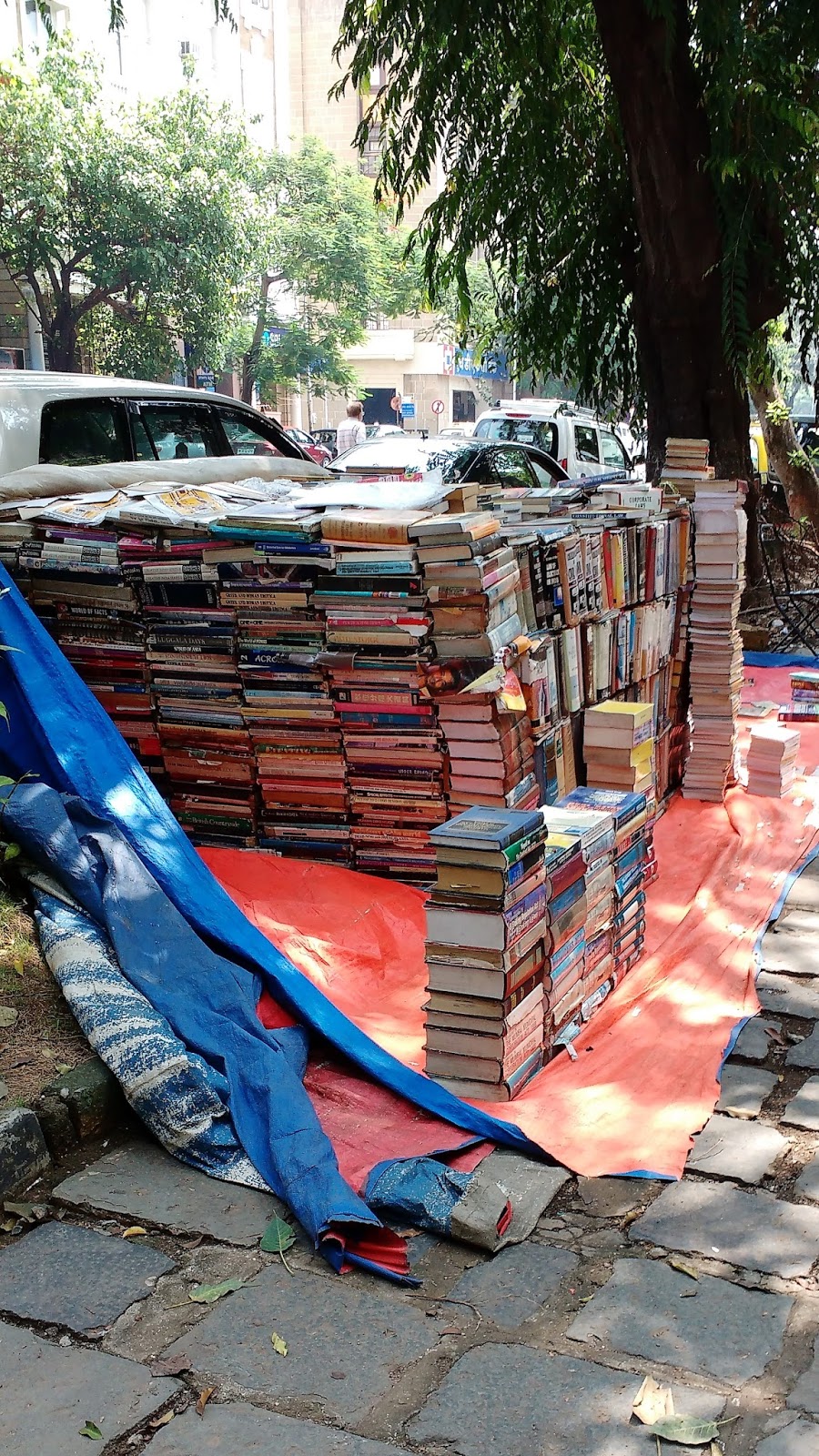
Books in a haystack near the old Central Telegraph Office.

© All photographs by Prashant C. Trikannad


Tuesday, October 03, 2017

Sniff the Detective by Richard McClure Scarry

Sniff is a detective.
He helps people find things.
He helps catch bad people.
He thinks with his head.
And he smells with his nose.


Personal commitments over the long weekend kept me away from my computer at home, and naturally, from blogging. I'm not comfortable writing or commenting on my cellphone or tablet. Something or other goes wrong, there are unsolicited pop-ups and often the page reloads itself. I find that annoying. I took the time off to read short stories, including a delightful children's detective story. Yes, you read that correctly. It was a first for me in middle age. I found the story online and read it with wide-eyed innocence. No, that's taking it too far.

Sniff the Detective (Golden Books, 1988) by the late American children's author and illustrator, Richard McClure Scarry, is an illustrated book containing two stories—Sniff Catches the Robber and Sniff's Best Case Ever—with anthropomorphic characters, animals who talk and act like humans. They're all very likeable.

In Sniff Catches the Robber, Chief Hound asks Sniff, the dog detective, to help catch a thief who has been stealing Mrs. Jewel's precious bracelets from under her nose. Mrs. Jewel, a matronly pig, likes to grow pumpkins and eat them too. Since Mrs. Jewel has neither been out nor has had any visitors, Sniff decides to spend the night at her house and catch the culprit red-handed.

In Sniff's Best Case Ever, it's raining and Sniff is lazing in bed when the police chief in another city summons him. Our sleuth is not happy because it's his birthday next day, and he wants to stay home and eat cake and ice cream. But duty calls. Sniff catches a train where he encounters shady guys wearing dark glasses and carrying violins, staring at him and scaring him out of his wits.

Sniff the Detective is a funny little book with large colourful illustrations and large typeface, the kind that you can read to your little kids or grandkids at bedtime. I liked Sniff's sleuthing philosophy. The K9 detective has got it right.

Surprised with my choice? Well, children's, YA or adult, a detective story is a detective story and you're never too young or old to read one. Reading time: 10 minutes, maybe less.


Note: Writer-blogger Patti Abbott is hosting Friday's Forgotten Books over at her eclectic blog Pattinase, where you can read some fine reviews of forgotten or overlooked books.